


2012

Heat Stress & the Human Body
Tip written by: Infraspection Institute
For many, the peak of Summer brings high temperatures to the workplace. For others, high temperatures in the workplace are an everyday occurrence. Understanding heat stress and its attendant safety challenges is crucial for those working in hot environments.
What is heat stress?
Heat stress is a physical hazard. It is caused by environmental conditions and results in the breakdown of the human thermal regulating system.
What are the symptoms of heat stress?
There are various degrees of heat stress. Each has its own unique symptoms. The most common form of heat stress is heat exhaustion. Symptoms of heat exhaustion include dizziness, confusion, headaches, upset stomach, weakness, decreased urine output, dark-colored urine, fainting, and pale clammy skin.
What do I do If I think I am experiencing some form of heat stress?
Act immediately –
- Advise a co-worker that you do not feel well
- Move to an area away from the hot environment
- Seek shade and cooler temperatures
- Drink water (1 – 8 oz. cup every 15 minutes) unless sick to the stomach
- Have someone stay with you until you feel better
What should I think about before working in a hot environment?
Before working in a hot environment, consider the type of work to be performed, duration of time to be spent in hot areas, level of physical activity, and other nearby hazards. Always use appropriate PPE and work together as a team.
Visit Infraspection Institute Web Site
Heat Stress & Hydration
Tip written by: Infraspection Institute
An ounce of prevention is worth a pound of cure. In last week’s Tip, we covered the topic of heat stress, its symptoms, and treatment. This Tip focuses on the importance of hydration as a preventive measure.
What is heat stress?
Heat stress is a physical hazard. It is caused by environmental conditions and results in the breakdown of the human thermal regulating system. If you work or play in hot environments, your body needs a lot more water than you might think.
What is hydration?
Hydration is the process of adding water. Our bodies need water to do many things. In hot environments we need large quantities of water to help keep our bodies cooled to a temperature that allows them to function properly. Heat stress becomes a health and safety concern when the volume of water we need to function drops below the level necessary to maintain homeostasis. We call this low water condition dehydration or under-hydration. The average person is 7% under-hydrated.
How can I avoid being under-hydrated?
Developing the habit of drinking water at routine intervals. One 8 oz. cup every hour on hot days will assure proper hydration.
How will I know if I am properly hydrated?
Check the color of your urine. You are properly hydrated if your urine is clear, copious in volume, and light yellow in color.
What are the benefits of proper hydration?
Staying properly hydrated will help to avoid heat stress and may increase your energy level. For every 1% under-hydration, you lose 5% of your energy potential.
Visit Infraspection Institute Web Site
What Is a Subpoena Duces Tecum?
Tip provided by:
Robert J. Incollingo
416 Black Horse Pike
Glendora, NJ 08029
856-234-3800
www.rjilaw.com
A subpoena is a paper used in a court or administrative proceeding to command a nonparty to appear and testify, and in the case of a subpoena duces tecum, to produce certain items or documents for use in the case (sub poena = under punishment, and duces tecum = bring with you). Threat of punishment makes a subpoena a form of “compulsory process” by which the government exercises jurisdiction over you and your property.

A subpoena is not a summons; by contrast, a summons orders you to appear in court as a party to defend claims made against you. Failure to appear in response to a summons can result in entry of default and default judgment. Failure to appear in response to a subpoena can result in penalties for contempt of court.
So, you ignore a properly drawn and served subpoena at your peril, and the remedy of the requesting party will be to have you ordered to appear in court and show why you should not be held in contempt. The court or administrative tribunal in which the subpoena is issued will very likely be jealous of its authority in this regard. Fines and even incarceration are possible sanctions.
When served with a subpoena duces tecum, read it carefully, noting the date, time and place for appearance, and the material you have been ordered to produce. Then call your lawyer and send her a copy of the subpoena for review and appropriate comment. It may be that local custom allows you to send copies of the documents to be produced without the need for your appearance. If so, you will probably have to sign a certification which will enable the use of the records as evidence without formal foundational testimony.
If your testimony will be required at the court proceeding along with the subpoenaed documents, bring the originals. For certain evidentiary purposes, only originals will do. Ask your lawyer about local rules that apply to documents maintained in digital format – it may be that you can have the costs of production paid by the requesting party.
Remember, when served with a subpoena or subpoena duces tecum, you need to act with the advice of counsel. Ask your lawyer if the subpoena seeks your expert opinion testimony without lawfully required compensation. If the subpoena is defective or illegally intrusive or burdensome, your lawyer may move the issuing authority for an order to quash the subpoena, which is to say, a directive that the subpoena is null and void and of no legal effect.
Most times, a subpoena duces tecum merely requires the custodian of records to swear that documents produced were prepared and maintained in the ordinary course of business, and that entries in the records were made at or about the dates or times noted. Other times, the records are an afterthought, and witness testimony is the main event. At all times, a subpoena duces tecum is a serious matter, which if ignored or mishandled, can cost the careless recipient his money, his liberty or both.
Bob Incollingo is an attorney in private practice in New Jersey and a regular speaker at Infraspection Institute’s annual IR/INFO Conference.
Visit Infraspection Institute Web Site
Temperature Limits for Drive Belts
Tip written by: Infraspection Institute
Temperature is frequently used to gauge the condition of motors and power transmission equipment. In this Tip, we discuss the effect of heat on flexible drive belts and temperature limits for them.
Drive belts are an integral component on many types of machines. Despite the critical role they play in machine operation, V type drive belts tend to out-of-sight and out-of-mind until they fail. In most installations, belt temperature largely influences the life installed V belts.
As a rule of thumb, properly applied and maintained belts should not exceed 140º F (60º C), assuming an ambient temperature of less than 110º F (43º C). It should be noted that belt life can be greatly reduced by higher operating temperature. In fact, for every 18 F (10 C) increase in belt temperature, belt life is cut in half.
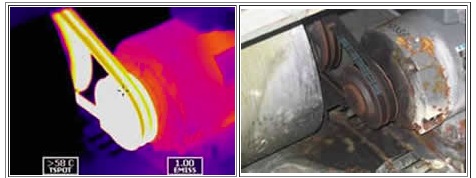
There are many factors that contribute to high belt operating temperature including, but not limited to: ambient air temperature, machine design, installation, alignment, and belt tension. Overheating belts can be readily detected with an infrared imager. Once detected, overheating belts should be investigated for cause and proper corrective measures undertaken as soon as possible. Doing so can help prevent unscheduled downtime and may prolong belt life.
Temperature limits for mechanical equipment is one of the many topics covered in the Infraspection Institute Level II Certified Infrared Thermographer® training course. Classes are held regularly throughout the year and are also available through our web-based Distance Learning Program. For more information, please call 609-239-4788 or visit www.infraspection.com.
Visit Infraspection Institute Web Site
Thermography and ASNT Certification
Tip written by: Infraspection Institute
In his commentary, ‘The 35 Undeniable Truths’, Rush Limbaugh states, “Words mean things.” This is especially true in thermography when it comes to one’s certification.
Certification has long been recognized as an indicator of a thermographer’s formal education and/or qualifications. Certification can have significant financial implications since buyers of inspection services often base purchasing decisions on a thermographer’s level of certification. Unfortunately, misstatements regarding certification, in particular ASNT certification, are quite common.
First of all, ASNT Certification – certification issued by the American Society of Nondestructive Testing – is only available from ASNT Headquarters in Columbus, Ohio. This certification program is designed to provide uniform testing and certification of NDT personnel that is ‘transportable’ when an NDT technician leaves the employ of a company.
The use of the title, ‘ASNT Certified Thermographer’ is incorrect since ASNT does not use or recognize the term ‘thermographer’ in any of its professional designations. The correct term is NDT person or NDT technician.
Although ASNT does offer Level II certification in some NDT disciplines, they presently do not certify anyone below Level III in the Thermal Infrared (TIR) Method. Therefore, titles such as “ASNT Level 2 Certified Thermographer” or “ASNT Level 1 Certified Thermographer” do not exist except on the websites or advertising materials of companies who believe they have earned such titles. There are many examples of such citations ranging from infrared consultants to top executives at infrared equipment manufacturers.
Perhaps the biggest reason that considerable confusion surrounds ASNT certification is that some infrared trainers provide misleading information on this topic. Further compounding this problem is that many thermographers are imprecise when they represent their credentials. Few thermographers who do misrepresent themselves are rarely called to task by their peers or their clients.
Ethics within any profession demand that practitioners always represent their qualifications and credentials accurately. Because words do mean things, thermographers must be careful when representing their qualifications and avoid using titles that do not exist. Accurately describing your certification reflects not only on you but on the credibility of our industry as well.
The topics of ASNT certification and how to establish ASNT-compliant certification programs are two of the many topics covered in depth within the Infraspection Institute Level III Certified Infrared Thermographer® training course. For more information on course dates or to register for a course, call 609-239-4788 or visit Infraspection Institute online.
Visit Infraspection Institute Web Site
Checking IR Equipment Calibration
Tip written by: Infraspection Institute
Equipment calibration can have a significant impact on the accuracy of infrared temperature measurement. In this Tip we discuss a simple technique for checking the accuracy of imaging and non-imaging radiometers.
Infrared radiometers must be within calibration in order to accurately measure temperatures. Traditionally, thermographers periodically send their equipment to the manufacturer for calibration. For some, this process can take several weeks and can be rather expensive. As an alternative, savvy thermographers can check the calibration of their instrument quickly and easily using some commonly available items.
In order to check infrared radiometer calibration, you will need at least two targets each with a known temperature and emittance. A simple solution is to use a container of ice water and a container of boiling water with a coupon of Scotch PVC electrical tape affixed to the container’s exterior surface. The size of both targets must exceed the spot measurement size of the instrument being calibrated. Container temperatures may be ascertained with a thermometer, thermocouple or contact radiometer.
Once targets have been prepared, use the following procedure:
- Turn radiometer on and allow it to stabilize to room temperature.
- Set radiometer perpendicular to target surface
- If possible, set radiometer inputs for distance, humidity & air temperature
- Aim, focus and calculate Reflected Temperature
- Set radiometer emittance control. Scotch 191 tape = 0.97 LW or SW. Ice = 0.98 LW; 0.93 SW
- Using subject radiometer, measure temperature of target. For ice water, measure temperature of ice cubes. For hot water container, measure tape coupon.
- Compare radiometer’s value with contact temperature reading for each target to ensure that radiometer is within spec
A heated blackbody simulator can be used to check instrument calibration at higher temperatures. Because radiometer calibration is not user-adjustable, it will be necessary to return it to the manufacturer should you find your instrument is out of spec.
Verifying infrared equipment calibration is specifically covered within Infraspection Institute’s online short course, How to Check Infrared Equipment Calibration. Available 24 hours per day, this 27 minute course focuses on the simple, yet effective techniques for calibrating infrared equipment. The techniques demonstrated are complaint with accepted industry practice and ISO standards. For more information or to register, please visit: http://www.successiries.com/SuccessIRies_108.html.
Visit Infraspection Institute Web Site
Infrared Inspections of Lightning Arrestors
Tip written by: Infraspection Institute
Infrared thermography is a proven technology for detecting defects in electrical circuits that are under load. Thermal imaging can also be used to detect defective lightning arrestors that are leaking current to ground.
Lightning arrestors are a common feature in electrical distribution systems and are used to guard against voltage surges associated with lightning strikes on power or communications lines. Installed at strategic locations, lightning arrestors act like a safety valves to provide a short circuit path that carries excess voltage to ground during a lightning strike.
Lightning arrestors are connected between a conductor and ground. In order to prevent a ground fault, lightning arrestors are engineered so that normal line voltage will not pass through the arrestor under normal conditions. While some lightning arrestors employ a simple spark gap, others consist of porcelain tubes that are filled with semi-conductive discs made of silicon carbide or zinc oxide. During a lightning strike, the resistance of the spark gap or oxide plates is overcome and excess energy flows to ground.
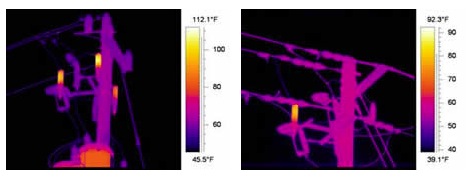
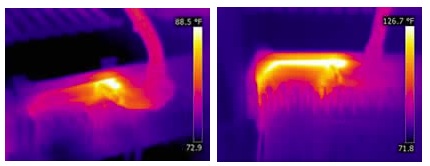
If a lightning strike is sufficiently strong, lightning arrestors may be permanently damaged and begin to conduct electricity to ground full time. When this happens, the body of the arrestors will heat up allowing them to be detected with a thermal imager. The images below show two examples of defective arrestors.
~ Images courtesy Stockton Infrared Thermographic Services
Infrared inspections of lightning arrestors are primarily qualitative in nature. As such, thermographers should compare similar arrestors to one another and note any that are inexplicably warm.
Properly functioning lightning arrestors should be uniform in temperature and close to ambient air temperature if they have not undergone recent solar loading. Individual arrestors should not have any pronounced hot spots across them. Working early in the morning, on cloudy days or at night will help to eliminate solar loading which can hide defective arrestors. When performing your inspection, don’t forget to check grounding connections for hot spots as well.
Infrared inspection of power distribution systems is one of the many topics covered in the Level I Infraspection Institute Certified Infrared Thermographer® training course. For information on thermographer training including course locations and dates, visit us online at www.infraspection.com or call us at 609-239-4788.
Visit Infraspection Institute Web Site
Infrared Inspections of Roofs Containing Foam Insulation
Tip written by: Infraspection Institute
You can’t believe everything you hear. This can be especially true when it comes to performing infrared inspections on flat roofs that contain closed cell foam insulation.
Closed cell foam generically describes several insulation materials commonly found in low slope or flat roofs. Typical materials include urethane foam, isocyanurate foam and, in some cases, cellular glass. Closed cell foam insulations typically offer good R value, are dimensionally stable, and can be used with a wide variety of roofing materials.
Another characteristic of closed cell foam insulations is that they are water resistant. This characteristic, however, only applies to short term exposure to water. When installed in a roofing system and exposed to water for extended periods of time, the cells tend to break down permitting the insulation to become quite absorbent. When this occurs, foam insulation can absorb large quantities of moisture and will exhibit the type of thermal patterns typically associated with absorbent insulations.
Over the years, many have claimed that infrared inspections of closed cell foam roofs are ineffective due to foam’s low absorbency. The thermal image below clearly shows the extent of water damage in a roof constructed with foam insulation.
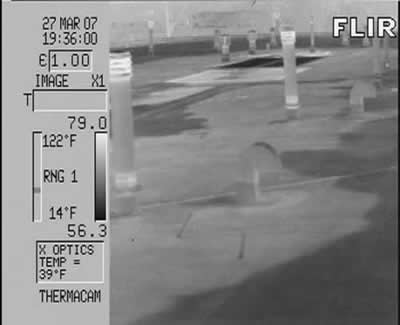
Note the solid thermal pattern typical of absorbent insulation.
Thermogram provided by Jersey Infrared Consultants
Initially, thermal patterns associated with latent moisture in roofs containing foam insulation will exhibit ‘picture frame’ signatures. These thermal patterns are due to water collecting at the perimeter of individual boards. As time progresses and the foam loses its water resistance, insulation boards will begin to exhibit the same type of thermal signatures exhibited by wet, absorbent insulations such as wood or glass fiber.
Infrared inspections of flat roofs is one of the many applications covered in the Infraspection Institute Level I Certified Infrared Thermographer® training course. For course schedules or to obtain a copy of the Standard for Infrared Inspection of Insulated Roofs, visit Infraspection Institute online or call us at 609-239-4788.
Visit Infraspection Institute Web Site
September 03, 2012
Sponsored by:

Infrared Inspections of PLC Cabinets
Tip provided by Brady Infrared Inspections, Inc.
Maximizing the effectiveness of an infrared inspection of electrical systems requires that all energized equipment be inspected. In this week’s Tip, we discuss how thermal imaging can be applied to programmable logic controls.
Programmable Logic Controls (PLC’s) are commonly used in manufacturing and industrial facilities to automate processes. A typical PLC cabinet (Figure 1) contains circuit breakers, power supplies, card readers/output modules, fused circuit boards, and numerous terminal connections.
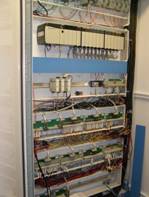
The intricate design of PLC cabinets can be intimidating to an inexperienced thermographer; however, most PLCs are similar with respect to their major components. A proper understanding of these components and their functions is imperative for accurate thermographic diagnoses.
Within a PLC, circuit breakers provide protection from overloads and/or ground fault. Power supplies provide the appropriate voltage and type of current needed. Output modules are either 120V AC or 24V DC depending upon the automated application. Output modules also provide access for computer programming. The fused circuit boards serve as the communication link from the output modules to the automated stations.
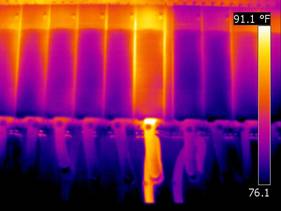
Heating on connections and components in PLC components can cause automated equipment to drop offline disrupting production. The most common problems detected with a thermal imager include loose connections and defective internal contacts on molded case circuit breakers. More subtle problems include defective cable connections to circuit boards (Figure 2) and failures of laminated circuit board ribbons (Figure 3).
Problems with output modules can also be detected. Normally, these components exhibit a thermal gradient that transitions from warm to cool when viewed from top to bottom. Thermal patterns showing heat propagating through the entire module signifies trouble (Figure 4).
Using infrared thermography to identify PLC problems can assist E&I technicians in their troubleshooting efforts and provides another step towards increasing uptime and reliability.
Tip provided by Brady Infrared Inspections, Inc.
Visit Infraspection Institute Web Site
September 10, 2012
Sponsored by:
School’s Open – Drive Carefully
Tip written by: Infraspection Institute
For many areas, September is a month of transition – cooler weather, leaves turning color, and children returning to school. In this Tip we offer some advice for keeping school students safe.
Over 56 million students are projected to be enrolled in U.S. schools this fall; over 70 percent will be under 15 years old. According to the National Highway Traffic Administration, one-fifth of all children 14 years of age and younger who die in motor vehicle crashes are pedestrians. On average, one pedestrian is killed in the United States every two hours.
Morning can be a dangerous time for children, as they travel to the bus stop, ride their bike to school or walk along their routine path. Afternoon introduces additional risks as the ring of the final bell marks the sound of freedom for school-age children. Unfortunately, children are often distracted by thoughts of playtime or are unable to accurately judge traffic situations while on their journey home.
Keeping the following in mind can help protect everyone’s safety:
- Slow down in or near school and residential areas.
- Drive with your headlights on – even during the day – so children and other drivers can see you.
- Look for clues such as School Safety Patrols, Adult Crossing Guards, bicycles, and playgrounds, which indicate children could be in the area.
- Always stop for school buses that are loading/unloading students.
- Limit distractions such as cell phones, CD players or other devices that cause you to take your eyes off the road.
- Practice extra caution in adverse weather conditions.
- Pay particular attention near schools during the morning and afternoon hours.
- Scan between parked cars and other objects for signs that children could dart into the road.
Remember, school’s open – drive carefully. You can make a difference just by staying alert and taking the extra care while driving where children are present. For more info on driving safety, contact the Mid-Atlantic AAA.
Visit Infraspection Institute Web Site
September 17, 2012
Sponsored by:
Ambient Temperature & Radiometer Accuracy
Tip written by: Infraspection Institute
Many who live in cold climates are in the habit of allowing their automobile to warm up before driving. For accurate temperature measurement, one should allow sufficient time for a radiometer to equalize with ambient temperature.
When performing non-contact temperature measurements, many thermographers correct for error sources due to emissivity, reflectivity and transmissivity. One error source that is often ignored is the temperature of the radiometer itself. Depending upon design, radiometer operating temperature can significantly affect measurement accuracy.
Radiometers are calibrated under controlled laboratory conditions at stable ambient temperatures. To help ensure measurement accuracy, quality radiometers are constructed with internal temperature sensors. These sensors allow the radiometer’s firmware to correct for operation at different ambient temperatures.
When performing non-contact temperature measurements, radiometers should always be allowed to stabilize with ambient air temperature. Additionally, one should ensure that the radiometer’s lens is clean and free of condensation.
Infraspection Institute has been training and certifying professional infrared thermographers since 1980. Our Level I, II, and III Certified Infrared Thermographer® training courses are fully compliant with ASNT and industry standards. Students may choose from open-enrollment and convenient web-based Distance Learning Courses. For more information or to register for a class, call 609-239-4788 or visit us online at www.infraspection.com.
Visit Infraspection Institute Web Site
September 24, 2012
Sponsored by:

SEO is DEAD..!!
Tip written by: Accolade Group of Vermont, LLC
 That’s the headline that has appeared in the last few weeks in not a few publications across the USA. So, what does it mean and is it really true?
SEO stands for Search Engine Optimization and if there is anyone in the business world who doesn’t know what that is…then SEO really isdead. SEO, simply stated, is the working with a website to manipulate a number of key factors that Google and other Search Engines look at to determine whether to include your website on the results page when someone does a search.
For a long time those factors included but were not limited to keywords, links to your website, the size font you used on the page for headlines, the description of your webpage and the title of your webpage. Although there is still much talk about metatag keywords, it should be noted that Google abandoned that datum a few years ago.
If there was any doubt about SEO being still alive, Google certainly made it difficult on websites with their release of Panda (February 2011) and, recently, Penguin (April 24, 2012). Panda and Penguin are code names of the update of the Google algorithm that evaluates a website for inclusion in the search engine result pages. The most recent modification to Panda was July 28, 2012. So, what did Panda and Penguin do?
The most interesting change with Panda is that an entire website is rated and ranked as opposed to a single webpage. This means that if Google considers a website of low quality, then all the individual changes to single pages won’t do much to promote your website.
So, if the above is YOUR definition of SEO, then, SEO is dead.
However, if you have been paying attention to what’s going on in cyberspace than you have perhaps heard about Twitter, FaceBook, Google+. You have probably heard about blogs and YouTube. All of these platforms are known collectively as Social Media.
This is where you need to look now if you are interested in SEO. What do all of the above sites have in common? People. People talking to People. People giving their opinions about a number of topics including websites. This is where SEO is right now.
What does it take to get people to talk about your website? There are a number of actions that you can take but one above all stands out: content. Really good content that provides value to people and then….well, people talk about things that provide value to them.
Consequently, the winning combination is Good Content that is promoted in Social Media that gets the attention of Google and other search engines. Then, your website will rank well on the results page. For the company that does this, SEO is very much alive!
Accolade Group of Vermont, LLC
oliver@accoladegroup.com
www.accoladegroup.com
websites and SEO for business
Visit Infraspection Institute Web Site
October 01, 2012
Sponsored by:
Temperature Differentials for Infrared Building Inspections – Part 1
Tip written by: Infraspection Institute
A common question among thermographers is, “How much temperature differential is needed to obtain good data?” In this two-part Tip, we discuss required temperature differentials for infrared inspections of buildings.
Proper conduct of any infrared inspection requires that a detectable temperature differential or Delta T is associated with the sought-after defect at the time of inspection. For infrared inspections of buildings and their subsystems, the appropriate time for an infrared inspection will depend upon, but not be limited to: the type of condition or defect, time of day, local atmospheric conditions, and imaging vantage point.
For building energy loss inspections, published standards require an inside/outside temperature differential of 10 C or 18 F degrees for at least 3 hours prior to the inspection. Such a differential will help to ensure that there is adequate heat flow through structural components necessary for an accurate inspection. While it is possible to conduct energy loss inspections with a lesser inside/outside temperature differential, the likelihood of missing defects increases with a decrease in Delta T.
IR inspections to detect building energy loss may be conducted from either the interior or exterior of a building; however, imaging from the interior is often more comprehensive and useful than macro shots taken exclusively from the exterior. Regardless of vantage point, one must make certain to account for the effects of solar loading, especially when imaging during daytime hours. Thermal patterns associated with missing or damaged insulation may appear warm or cool depending upon vantage point and site conditions.
In addition to the above, detecting latent moisture within or evaporating from building materials assumes a relatively high target emittance. Low emittance surfaces associated with metal building facades or roofs coated with aluminum paint may not lend themselves to an accurate infrared inspection.
Lastly, all infrared data should be verified by independent means, as appropriate. This testing may include visual and/or invasive moisture meter readings.
Infrared inspection of buildings is one of the many topics covered in the Infraspection Institute Level I Certified Infrared Thermographer® training course. For more information or to register for a course, visit Infraspection Institute or call us at 609-239-4788.
Visit Infraspection Institute Web Site
October 08, 2012
Sponsored by:
Temperature Differentials for Infrared Building Inspections – Part 2
Tip written by: Infraspection Institute
A common question among thermographers is, “How much temperature differential is needed to obtain good data?” In this two-part Tip, we discuss required temperature differentials for infrared inspections of buildings.
Proper conduct of any infrared inspection requires that a detectable temperature differential or Delta T is associated with the sought-after defect at the time of inspection. For infrared inspections of buildings and their subsystems, the appropriate time for an infrared inspection will depend upon, but not be limited to: the type of condition or defect, time of day, local atmospheric conditions, and imaging vantage point.
For detecting latent moisture within EIFS structures or insulated roofs, an inside/outside temperature differential is not necessary. For these applications, the IR inspection is traditionally conducted from outdoors during evening hours following a sunny day. Areas of latent moisture will typically show as warm areas since water will store and retain more solar energy than areas containing dry insulation.
For damage investigations, directly imaging wet building materials will usually result in well-defined amorphously shaped patterns. This application does not require an inside/outside temperature differential or solar loading. Rather, thermal patterns associated with moisture can be readily detected provided that water is evaporating at the time of inspection. For drywall, water may evaporate into the living space or into cavities behind the affected drywall. In most cases, water evaporating from a material will cause wet areas to appear cool.
In addition to the above, detecting latent moisture within or evaporating from building materials assumes a relatively high target emittance. Low emittance surfaces associated with metal building facades or roofs coated with aluminum paint may not lend themselves to an accurate infrared inspection.
Lastly, all infrared data should be verified by independent means, as appropriate. This testing may include visual and/or invasive moisture meter readings.
Infrared inspection of buildings is one of the many topics covered in the Infraspection Institute Level I Certified Infrared Thermographer® training course. For more information or to register for a course, visit Infraspection Institute or call us at 609-239-4788.
Visit Infraspection Institute Web Site
October 15, 2012
Sponsored by:
Temperature Limits for Drive Belts
Tip written by: Infraspection Institute
Temperature is frequently used to gauge the condition of motors and power transmission equipment. In this Tip, we discuss the effect of heat on flexible drive belts and temperature limits for them.
Drive belts are an integral component on many types of machines. Despite the critical role they play in machine operation, V type drive belts tend to out-of-sight and out-of-mind until they fail. In most installations, belt temperature largely influences the life installed V belts.
As a rule of thumb, properly applied and maintained belts should not exceed 140º F (60º C), assuming an ambient temperature of less than 110º F (43º C). It should be noted that belt life can be greatly reduced by higher operating temperature. In fact, for every 18 F (10 C) increase in belt temperature, belt life is cut in half.
There are many factors that contribute to high belt operating temperature including, but not limited to: ambient air temperature, machine design, installation, alignment, and belt tension. Overheating belts can be readily detected with an infrared imager. Once detected, overheating belts should be investigated for cause and proper corrective measures undertaken as soon as possible. Doing so can help prevent unscheduled downtime and may prolong belt life.
Temperature limits for mechanical equipment is one of the many topics covered in the Infraspection Institute Level II Certified Infrared Thermographer® training course. Classes are held regularly throughout the year and are also available through our web-based Distance Learning Program. For more information, please call 609-239-4788 or visit www.infraspection.com.
Visit Infraspection Institute Web Site
October 22, 2012
Sponsored by:
Post Processing Thermal Images
Tip written by: Infraspection Institute
Post processing of thermal images is a common practice for many thermographers. While image processing may provide a measure of convenience for some, it can have significant drawbacks.
For many thermal imagers, infrared images can be stored in 12 bit format. Saving thermal images in 12 bit format allows thermal images to be recalled at any time and post processed for level, gain and color palette. For imaging radiometers, temperature measurement settings such as emittance may also be changed. Post processing may take place within the imager or through a separate personal computer using the manufacturer’s proprietary software.
Over time, many thermographers have adopted a policy of quickly recording imagery in the field and then returning to the comfort of their office to further process their imagery. Although post processing affords the thermographer a variety of options for image analysis, one should be aware that post processing can be time consuming. Spending as little as five minutes processing imagery can result in a substantial increase in report preparation time.
In addition to wasted time, post processing may invalidate imagery as legal evidence. Not unlike digital photography, thermal images that have been post processed are creations and not originals. Should a thermographer’s report be introduced in a claim, a competent opponent will likely question if the imagery is original. In such situations, a thermographer must be able to affirm that his/her report does not contain processed imagery.
In light of the above, we recommend that thermographers store images exactly the way they will appear in their report and endeavor to avoid post processing altogether.
Image recording and reporting are two of the many topics covered in all Infraspection Institute Certified Infrared Thermographer® training courses. For information on thermographer training and certification, visit us online at www.infraspection.com or call us at 609-239-4788.
Visit Infraspection Institute Web Site
October 29, 2012
Sponsored by:
Autumn Driving Tips
Tip written by: Infraspection Institute
It’s that time of year when brightly colored trees remind us that Autumn is upon us. Taking a few precautions can help to make driving safer by addressing challenges unique to the fall season.
- Patches of fallen leaves can be just as treacherous as patches of ice. Fallen leaves retain large amounts of water and can create a slippery surface. Drive slowly through them and avoid hard or panic braking.
- Fall brings the first frost. Be aware of slippery conditions that occur with frost. At freezing or near freezing temperatures, the moisture on bridges and overpasses will become ice much more quickly than the approach roadway. The roadways hold heat and the bridges do not; you can go from wet roadway to ice in just a fraction of a second.
- Fall weather such as rain, fog, sleet and wet snow require full driver attention. Remember the “two-second rule” when following other drivers, and in severe weather increase your following distance. If you are being tailgated, let the other driver pass.
- Later sunrises and earlier sunsets can create sun glare. Be sure your windows are clean, inside and out, and have sunglasses handy. If you’re driving away from a low sun, glare will not be a problem for you, but it can be for the drivers approaching from the other direction. It may help to use your low beam headlights, allowing you to be seen more readily.
- In most areas, animal collisions are at their peak in the fall. Be on guard when traveling through areas where wildlife is likely to cross the road.
Common sense along with the basics of safe driving – always wearing a safety belt, driving alert and sober, and driving at safe and legal speeds – can help you travel safely in the fall.
Visit Infraspection Institute Web Site
November 05, 2012
Sponsored by:
Change Routes with the Season
Tip written by: Infraspection Institute
To everything there is a season. The same is true for infrared inspection routes within facilities where equipment or systems are operated seasonally.
Traditionally, many facilities perform infrared inspections on an annual basis. While this approach may detect deficiencies within operating systems, systems not under load due to seasonal or operational conditions cannot be effectively inspected.
Examples of seasonally operated equipment include heating/cooling systems, production machinery, and the electrical distribution system. Effective infrared inspections of seasonally operated equipment begin at the planning stages and should include the following:
- Develop an inventory list of equipment to be inspected
- Group seasonally operated equipment into dedicated routes
- Ascertain operating times for subject systems
- Schedule infrared inspections for the beginning of operating season
- Inspect subject systems while under normal load
Be certain to perform a follow up inspection for all detected exceptions once necessary repairs have been completed. As always, remember to observe all necessary safety precautions before, and during the infrared inspection.
The topic of route based infrared inspections and how to properly organize inspection routes are two of the many topics covered in the Infraspection Institute Level I Certified Infrared Thermographer® training course. For more information or to register for a course, visit Infraspection Institute or call us at 609-239-4788.
Visit Infraspection Institute Web Site
November 12, 2012
Sponsored by:
Using IR Inspections to Help Prepare for Heating Season
Tip written by: Infraspection Institute
For many facilities the beginning of autumn means that heating season is just around the corner. Infrared inspections can help point out the types of energy liabilities that can account for significant waste.
With energy costs at an all time high, energy conservation is more important than ever. With companies looking for ways to contain costs, energy conservation makes sense. When properly conducted, infrared inspections can point out areas of thermal deficiencies or energy loss. When coupled with timely, effective repairs, considerable savings can be realized.
There are many areas where infrared inspections may be performed to help detect excess energy loss. Among the most common are:
- Building envelopes – for missing or damaged insulation and air leakage
- Flat roofs – to detect water damaged insulation
- Steam systems – to detect defective steam traps
- Underground piping – to detect pipe leaks
- Boilers and process equipment – to detect excess energy loss or air leaks
When it comes to the above inspections, time is of the essence in order to maximize savings. Infrared inspections should be carried out as soon as possible. Waiting until the heating season is well under way often results in documenting opportunity lost rather than savings realized.
Infrared inspection of building envelopes and thermal energy delivery systems are two of the many topics covered in the Infraspection Institute Level I Certified Infrared Thermographer® training course. This same information is also covered in our Distance Learning Level I Thermography course. For more information or to register for a course, visit Infraspection Institute or call us at 609-239-4788.
Visit Infraspection Institute Web Site
November 19, 2012
Sponsored by:
Thanksgiving Safety Tip
Tip written by: Infraspection Institute
When it comes to heat transfer and safety, thermographers traditionally think of the workplace. With the Thanksgiving holiday upon us, neither of these topics should be overlooked when it comes to preparing the holiday feast.
According to estimates from the Centers for Disease Control, approximately 76 million Americans become ill each year as a result of foodborne pathogens. Of these, approximately 5,000 die. Proper hygiene practices before, during, and after food preparation can reduce the risk of food poisoning.
As part of their nationwide Be Food Safe public education campaign, the US Department of Agriculture offers four simple tips for safe food preparation:
 Clean – Wash hands, surfaces and utensils often to avoid spreading bacteria when preparing food.
 Separate – Use different cutting boards for raw meat, poultry, seafood and vegetables. Keep raw turkey away from vegetables and side dishes that won’t be cooked.
 Cook – You can’t tell it’s done by how it looks! Use a food thermometer. Every part of the turkey should reach a minimum internal temperature of 165ºF.
 Chill – Keep the refrigerator at 40ºF or below to keep bacteria from growing. Pumpkin pie should always be refrigerated and all food should be refrigerated within two hours.
If deep fried turkey is your preference, be sure to observe all safety precautions and never leave your fryer unattended. For more information on food safety, visit the US Department of Agriculture website.
From all of us at Infraspection Institute, Happy Thanksgiving to all of our readers and friends! May you enjoy a safe and happy holiday in the company of those you love.
~ Jim and Christopher Seffrin ~
Visit Infraspection Institute Web Site
November 26, 2012
Sponsored by:
Infrared Inspections of Spandrel Glass Panels
Tip written by: Infraspection Institute
Thermal imaging is widely used to detect evidence of excess energy loss in building envelopes. Under proper conditions thermal imaging may be used to detect excess energy loss through spandrel glass panels.
Glass curtain walls are a common feature found on modern commercial buildings. Opaque glass panels called spandrels are used to cover materials or prevent construction elements from being viewed from the exterior of the building. Examples of such areas include areas between floors, hung ceiling areas, knee-wall areas below vision lights, and sometimes even columns or partitions.

Depending upon building construction, spandrel glass may be installed as single-thickness panes, as part of insulating glass units, or as laminated glass. When installed as single pane units, spandrel panels are often insulated to prevent excess energy loss; however, construction details will vary between systems.
When performing an infrared inspection of spandrel glass panels, keep the following in mind:
- Prior to the infrared inspection, ascertain building usage and construction. Be aware of HVAC settings and how they are likely to affect observed imagery.
- Spandrel glass panels can vary widely. Determine panel construction and characteristics prior to the inspection.
- When imaging from a building’s exterior, significant errors can be introduced by hot/cold reflections from nearby structures or the sky.
- Because spandrel glass often has a low emittance; detected exceptions are likely to have low temperature differentials.
Infrared inspections of spandrel glass should be performed during evening hours with an inside/outside temperature differential of at least 10ºC. Exceptions associated with spandrel glass may appear as hot or cold depending upon building usage, imaging vantage point, and panel construction. As always, detected exceptions should be investigated for cause and appropriate corrective measures taken.
Infrared inspection of building envelopes is one of the many topics covered in the Level I Infraspection Institute Certified Infrared Thermographer® training course. For information on thermographer training including course locations and dates, visit us online at Infraspection Institute or call us at 609-239-4788.
~ Tip suggested by Kevin Richardson
Visit Infraspection Institute Web Site
December 03, 2012
Sponsored by:
Why Building Corners Appear Cool
Tip written by: Infraspection Institute
When performing infrared inspections of framed buildings from the interior, thermographers often note that corners appear at a different temperature. With this Tip we explore the reasons for this condition and how to differentiate potential problems from normal conditions.
Corners are a common construction detail found within building walls that utilize frame construction. Corners are typically constructed with vertical framing members that both support the framed wall and provide a nailing surface for interior paneling or drywall. Although details can vary, a typical corner has three vertical studs in close proximity to each other.
More energy loss occurs at corners for two reasons: Studs are more conductive than insulation; and there is little or no space for insulation to be installed wherever corner framing studs are present. Because of this, it is normal to see greater energy loss at corners when compared to a properly insulated wall cavity.
When performing an infrared inspection of framed walls from the interior of a building with cold outdoor temperatures, corners will typically appear cooler than insulated wall cavities. Observed thermal patterns will reverse should the same inspection scenario exist with warm outdoor temperatures.
When thermographically inspecting corner details, it is normal to observe a straight vertical line from floor to ceiling. This vertical line should be confined to the corner itself and not extend onto the flat wall surfaces adjacent to the corner. Amorphous or geometric thermal patterns appearing within or adjacent to corners should be investigated for cause.
Infrared inspection of building envelopes is one of the many applications covered in the Infraspection Institute Level I Certified Infrared Thermographer® training course. For course schedules or to obtain a copy of the Guideline for Performing Infrared Inspections of Building Envelopes and Insulated Roofs, visit Infraspection Institute online at www.infraspection.com or call us at 609-239-4788.
Visit Infraspection Institute Web Site
December 10, 2012
Sponsored by:
IR Inspections of Parking Garage Ceilings
Tip Coauthored by Wayne Swirnow Infrared Imaging Services
When inspecting building envelopes for heat loss, thermographers tend to focus their imaging efforts on the sidewalls and roof. For some buildings, it is important to also thermographically inspect the underside of the building.
In many parts of the United States a common building practice for commercial structures is to elevate the building on support columns and place an unheated parking garage directly below the first story. This practice exposes the underside of the first occupied level and its associated plumbing to the outside environment.
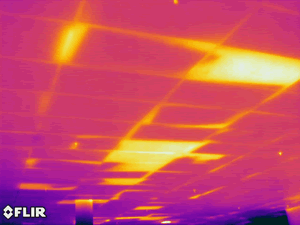
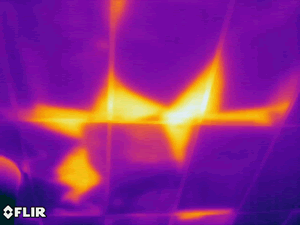
In colder regions a common approach is to construct a suspended ceiling for the garage and to create a heated space between the underside of the first occupied floor and the garage ceiling so that water, waste, and sprinkler pipes do not freeze. To minimize heat loss, batts of glass fiber insulation are often laid directly on top of the ceiling tiles.
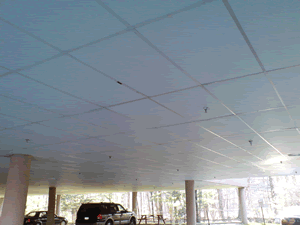
When performed under proper conditions, an infrared inspection of the garage ceiling can quickly reveal thermal patterns caused by missing, misapplied, or damaged insulation. Areas exhibiting excess energy loss may then be visually inspected to ascertain cause.
Infrared inspection of building envelopes is one of the many topics covered in the Infraspection Institute Level I Certified Infrared Thermographer® training course. For course information or to obtain a copy of the Standard for Infrared Inspection of Building Envelopes, visit Infraspection Institute online or call us at 609-239-4788.
Visit Infraspection Institute Web Site
December 17, 2012
Sponsored by:
Holiday Wishes
Tip written by: Infraspection Institute
It is hard to believe that another year has passed and the holiday season is once again upon us. With this Tip, we invite our readers to share a favorite memory as we celebrate the season.
Recently, we noticed a television schedule announcing the airing of one of our all-time favorite programs, ‘A Charlie Brown Christmas’. As children growing up in the 1960’s, the annual airing of this program was proof that Christmas was just around the corner.
With no reruns on broadcast television, we, like many of our childhood friends, would plan our entire week around watching this special program each year. With a cool soundtrack, the program brought our favorite Peanuts characters to life as Charlie Brown strove to discover the meaning of Christmas. To this day, Linus VanPelt’s simple monologue is one of our favorite holiday memories.
With the holidays and busy year-end schedules upon us once again, we invite you to take the time to make special memories with family and friends and to keep them in your heart where you may easily find them in the future.
As we enjoy this holiday season, we extend a heartfelt Thank You to all of our readers, friends, and associates throughout the world for everything that you do for us all year long.
May your holidays be filled with peace and joy and your New Year with good health and happiness.
~ Jim & Chris Seffrin
Linus’ Monologue
Charlie Brown: Isn’t there anyone who knows what Christmas is all about?
Linus: Sure, Charlie Brown. I can tell you what Christmas is all about. Lights, please.
And there were in the same country, shepherds, abiding in the fields, keeping watch over their flock by night and lo, the angel of the Lord came upon them. And the glory of the Lord shone ‘round about them and they were so afraid. And the angel said unto them, “Fear not. For behold, I bring you tidings of great joy which shall be to all people. For unto you is born this day in the city of David, a savior, which is Christ the Lord. And this shall be a sign unto you, ye shall find the babe wrapped in swaddling clothes lying in a manger.”
And suddenly there was with the angel, a multitude of the heavenly hosts praising God and saying, “Glory to God in the highest and on Earth, Peace and Goodwill toward men.”
That’s what Christmas is all about Charlie Brown.
Excerpted from ‘A Charlie Brown Christmas’ by Charles Schulz
Visit Infraspection Institute Web Site
December 24, 2012
Sponsored by:
Make a New Year’s Resolution for Safety
Tip written by: Infraspection Institute
With the New Year upon us, many of us will follow the tradition of resolving to change or better ourselves. With this Tip, we offer suggestions for making job safety a priority.
The New Year is symbolic for many reasons. For some, the New Year represents a fresh start or new beginning. For others, it provides an opportunity to rededicate one’s self to a set of goals or principles. The New Year provides a perfect opportunity for thermographers to take stock of workplace safety practices and procedures. In doing so, be sure to keep the following in mind:
- Review safety procedures to ensure that they are complete and current
- Ensure that safety training is up-to-date for all personnel including First Aid and CPR
- Physically inspect all Personal Protective Equipment to ensure it is in good condition
- Check calibration and/or replacement dates for all monitoring or test equipment
Lastly, resolve to make safety your number one priority each and every day. Safety is not a poster, a slogan, or a set of actions to be followed only when it is convenient. Rather, safety is way of life that affects not only you but those around you.
Thermographer safety is one of the many topics covered in the Level I Infraspection Institute Certified Infrared Thermographer® training course. For information on thermographer training including course locations and dates, visit us online at www.infraspection.com or call us at 609-239-4788.